Readily A Parent


Twenty nine years ago this Friday, September 5th, I became a father for the first time. My oldest son, Jon, was born. Looking back on it now, I realize that I wasn’t prepared- the sleepless nights, the diaper changing, all of those inconveniences you hear about. But they were nothing, they weren’t a big deal.  What I really wasn’t prepared for was the spiritual sonic boom of love that struck me. a force of unimagined power, the first time I held my son in my arms. It was one of those rare moments in a life when I knew, as it was happening, that everything was changing, that nothing would be the same anymore.

There are things expected from a new parent that may be intimidating at first.  Things like responsibility and commitment. These sound scary at first, but they become second thought when that lighting bolt of love hits you. You know beyond the shadow of a doubt that there’s nothing you wouldn’t do on behalf of your child.  The trade off is the opportunity to see the world again through a child’s eye.  You’re given access to experience the wonder and awe of everyday living and breathing and being, and the realization of just how perfect and precious these things are.

jon 1

Jon and I cutting the grass. By the apple blossoms you can tell this is mid to late may of 1986.

Here’s an excerpt from a piece I wrote several years ago, on the occasion of Jon’s college graduation, previously posted on this site as part of a piece called “We Could be Heroes:”

* * * * *

Our first child, our son Jonathan, was born at about 8:30 on the warm late summer night of September 5th, 1985.  To say he was in no hurry to enter the world would be an understatement.  It took a pair of forceps and 35 hours of labor to bring him out.  But that’s Jon – stubborn and independent to this day, he’s always been his own man, and his entry to the world, like nearly everything that has followed, would be done on his terms, his way

I was, of course, thrilled beyond words when the doctor pronounced, “It’s a boy.”  Deb and I had been married just over four years, having bought our house in Pleasant Prairie the previous November, and we were ready for children, ready to begin raising a family.  We had purchased a modest house in what was still a pretty rural neighborhood, on 2 ½ acres of land that was once part of a large apple orchard.  When we bought the house, there were still 35 mature fruit bearing apple trees on the grounds.  Across the street from us was a large meadow that ended where 37 acres of old growth oak woods stood.  At night, in the winter, deer would make their way out of the woods and through the meadow to eat the remaining apples that had fallen on the ground in our yard.  One evening, Deb and I counted seven deer feeding in our front yard.  We were convinced this was the right environment for our children to be raised in.

The first night Jon was home with us, we put him in his crib in the bedroom next to ours and watched him fall asleep.  Moments later a severe thunderstorm hit that shook the rafters of the house for hours.  With each crack of lighting and boom of thunder, we were awake and in his room, the two of us, amazed every time to find him still peacefully asleep.

It seemed for the next two years that that would be the only night he slept through.  We had these cheap baby monitor walkie-talkie gizmos, one listening in his room and the other broadcasting in our room.  My ear was trained such that when the slightest sound of static would carry over these airwaves, I’d wake and shoot like a rocket out of bed into Jon’s room, and if he was in fact awake, I’d get a bottle out of the fridge, sit him on my lap in the wooden rocking chair we had put in front of the big window in his room, and rock him to sleep.  This was our nightly ritual for nearly all of the first two years of his life.  I almost always got up before Deb, even the nights when I’d lie awake and wait for either his crying to stop or Deb to get up, whichever came first, until I could stand it no more and got up, at which point Deb would stop pretending and fall back asleep for real.

But I didn’t mind waking up and spending that time with my boy.   I was head over heels in love with him.  There in the soft lamplight of the night in that rocking chair in his room, I’d talk to him in hushed, soothing tones, comforting him and reading to him.  Over the course of several months I actually read to him in its entirety Jack London’s “The Call of the Wild,” knowing full well that he understood little of it but happy to have an excuse to re-read the favorite book of my own childhood.

jon2

John and I in the rocking chair where I used to tell him the story of the Jon-Star. To our right is Paco, a St. Bernard-Collie mix that was always on guard for Jon.

When the night would get too long and it was time for him and I to both get back to sleep, I’d position the rocking chair so we could see the night sky thru the big window in his room, and I’d point to the bright star in the west and tell him the story of the Jon-star.  The Jon-star, I explained, was the one star out of the millions of stars in the sky that burned brightest for Jon and Jon alone, and no matter when, no matter where in the world he might find himself, if he was ever lost in the night, all he had to do was find that star and say, “Dad”, and no matter where I was, I’d hear him, and know he was lost.  And at that moment, I’d look to the sky, and the Jon-star would also burn brightest for me, and no matter where I was or how far away Jon was, I’d follow that star and I’d find him, and he wouldn’t be lost anymore.

 * * *  * *

Jon is an adult now, working and living in Saint Paul, Minnesota. He’s a professional, with a job as safety coordinator for a regional airline.  Jon always loved airplanes and flying, having majored in aviation at St. Cloud State university. He’s turned out to be an exceptional man:  bright, confident, capable and caring. I sense sometimes when we’re together that he’s looking out for me, and I realize now that the light of the Jon-star shines both ways, and that if I’m ever lost, he’ll find me.

I am so proud of the man my son has grown up to be. I know that as a father, I can only take so much credit for how he’s turned out. I know I made mistakes, I know  I made my share of bad decisions, I have my share of regrets. Thankfully, Jon’s been strong enough to overcome my missteps.

But one thing has remained constant all these years – my love for my son is as pure and powerful as when it first struck, and I am a stronger and better man for it.
 

jon 3

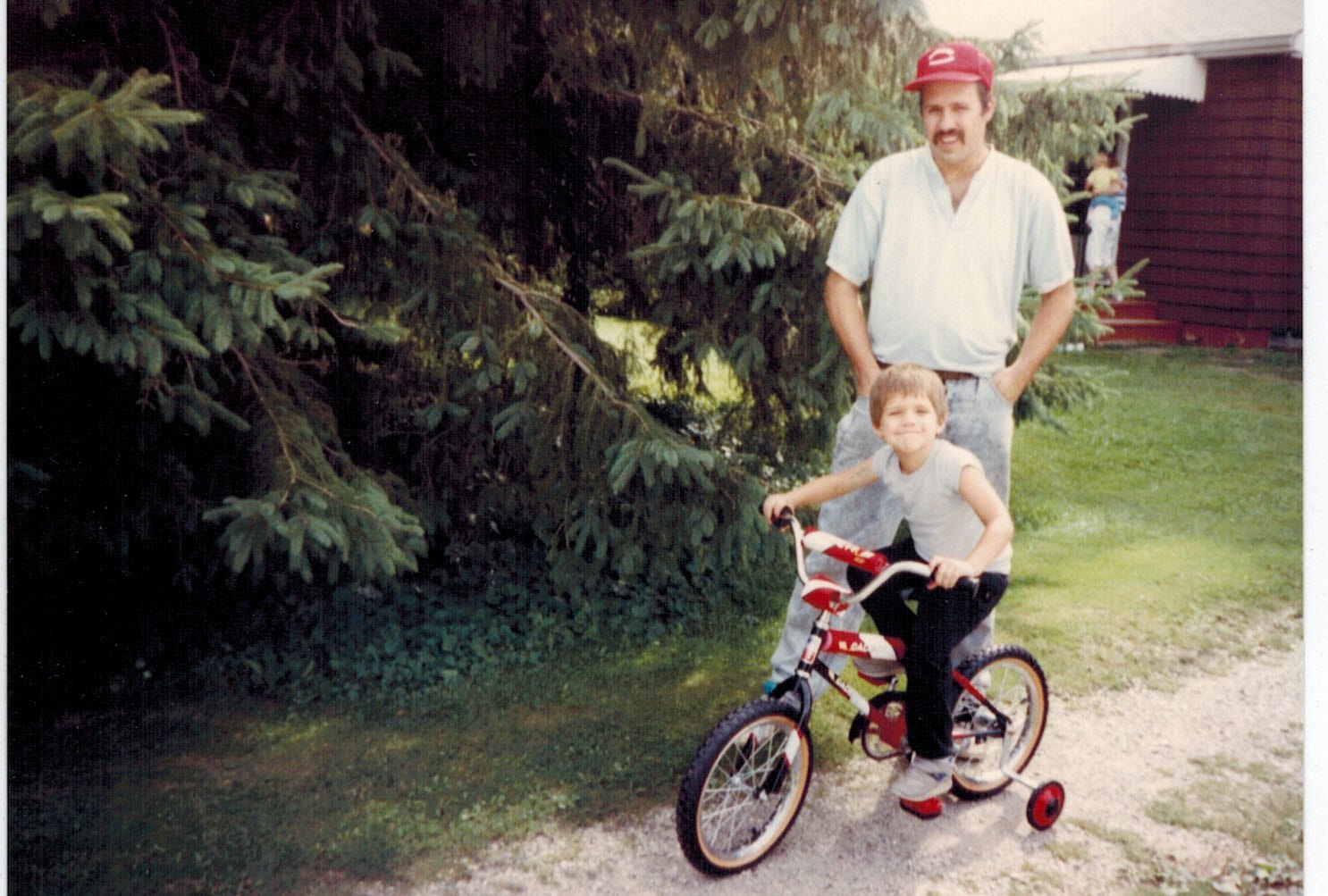
Jon’s first flying lesson

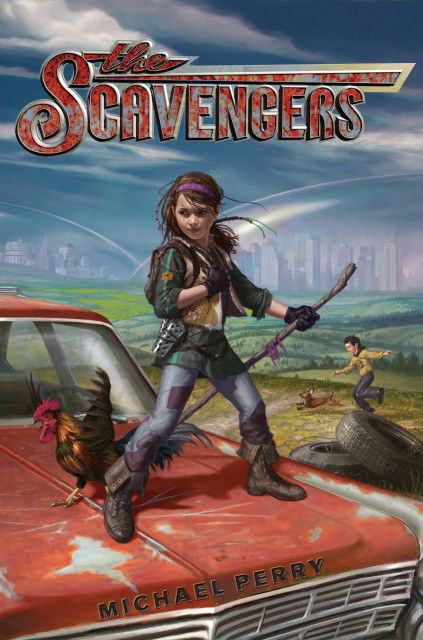
The Scavengers by Michael Perry


Scavengers cover 2

“Use the time of a total stranger in such a way that he or she will not feel that time was wasted.” –  Kurt Vonnegut, advice to writers

I’ve been a fan of Michael Perry’s writing for a few years now.  In books like Population 485 and Visiting Tom, he established himself as a master of the narrative personal memoir, chronicling life in the rural Midwest, telling personal stories of a vanishing people and the countryside they inhabit. His non-fiction works so well because he writes from the inside out; as a long time resident of the isolated small towns and farms that is his setting, he puts himself in the center of the narrative, and we see the world through his eyes. His books are a slow cooked stew of humor, nostalgia, tragedy and triumph all blended together and seasoned with his love of the northwestern Wisconsin landscape and his eccentric but decent neighbors, and served with prose that balances the humor and longing with the cadence and imagery of poetry.

When I first heard that Perry was dabbling in fiction, I was intrigued. The stories he tells in his memoirs may be non-fiction, but they are stories none the less.  Population 485 and Visiting Tom work so well because Perry has such a gift for keeping the narrative moving and breathing life into the characters, two elements crucial to writing good fiction.  Fact or fiction, stories are stories, and story tellers are story tellers.

For me, writing fiction has always felt like a more personal endeavor than memoirs.  In memoir, one is always constrained by facts, by things that actually happened.  In fiction, the only constraints are the limitations of your own imagination. By writing fiction, the writer creates new worlds, worlds that have to come from somewhere inside. It takes nerve to write a novel, to assume that you’re able to imagine and describe a setting and characters and a narrative that will justify the reader’s investment of the time it takes to read it.

When I heard that Perry’s new book was not only fiction but a dystopian mid grade adventure, I thought, what could be further from the grounded reality and the reverence for the past that is Perry’s usual work? It’s as if he wanted to stretch beyond his comfort zone, to challenge himself, and he’s swinging for the fences on the first pitch.

The Scavengers contains such highly imaginative elements as solar bears, “grey devils”, bubble cities, “scary pruners,” and huge crops of genetically modified corn.  It describes a population divided by the dwellers of cities encased in giant bubbles and those who choose to live by their wits in the lawless wilderness outside the bubbles. These things aside, you don’t have to dig too deep to be reminded that this is still a Michael Perry book.

First of all, the landscape, despite being charred and modified by climate change, remains unmistakably northwestern Wisconsin.  Readers of Population 485 will recognize the town of  Nobbern  as the real life town of New Auburn. Setting is always vitally important to Perry.  The Scavengers is set in the same latitude and longitude as Perry’s non-fiction, and while climate change has introduced new plants and animals and set the weather out of whack, Perry’s descriptive passages reveal the same love of nature.  You can feel the night breeze, you can see and smell the green rolling hills, and you can understand and appreciate why the narrator, Maggie, a.k.a. “Ford Falcon,” loves living out bubble so much.

The Scavengers may be set in the future, but that doesn’t prevent Perry from further exploration of one of the primary on-going themes of his non-fiction work:  the relationship of the past to the present.  The people who have chosen to live outside of the bubble are quite literally off the grid, and they have to rely upon their own creativity and what they can learn from whatever’s available, including an ancient and sexist but none the less helpful boy scouting manual written in 1880.  Cell phones and computers and Face Book are nowhere to be found out bubble. Instead, Maggie learns to communicate with her neighbor Toad via semaphore lamps and other coded methods. Maggie and Toad make their living by scavenging junk yards for abandoned relics and trading them for food and clothing. They are quite literally living off of the past.

Maggie, the twelve year old narrator and protagonist, is a remarkable and memorable creation. Strong, smart, independent, resourceful, and passionate, she is exceptional and unique, a true heroine.  The story is told from her point of view, and we follow her, she is “on screen,” for every moment of the book.  We learn about her relationships with her parents – her mother, who Maggie loves more than anything, as they bond via the poetry of Emily Dickinson and Earl Grey tea, and her father, who her feelings for are  a bit more complex and ambiguous.  He’s emotional, sentimental even, but is also strangely aloof and distant, easily driven to distraction. We eventually learn that he has a secret that Maggie has to draw out of him in a most unexpected way. Without revealing too much, it turns out that he played a key role in the events that led up to the creation of the in bubbles and out bubbles, and he’s a wanted man by government officials  who are secretly combing the countryside for him.

Maggie also has a little brother, Dookie, who appears to be developmentally disabled in some unidentified manner.  Dookie represents one of the few missed opportunities in the book, as I never felt he was adequately explained or played an important enough role in the story (perhaps in the sequel Perry says is coming in 2015 he’ll play a larger part).

A Michael Perry book wouldn’t be a Michael Perry book without humor, and there’s plenty here.  There’s a psychotic rooster named Hatchet who is the bane of Maggie’s existence, attacking her at the most unexpected and inopportune times.  There’s the character of the blacksmith in the town of Nobbern who loves to talk but hates to work; his long suffering wife does the work for the two of them and more but has nearly given up on getting a spoken word in.

As in Perry’s memoir writing, The Scavengers celebrates the importance of neighbors. Maggie’s closest friends are an elderly couple who live a hill away, Toad and Arlinda Hooper, who at least slightly resemble Tom and Arlene, the elderly neighbors Perry wrote about in Visiting Tom.  In one of the book’s constant ongoing sources of amusement, Toad loves wordplay and communicates almost exclusively in pig Latin and spoonerisms (like the wagon they travel to Nobbern to trade goods and battle “Grey devils” from is called the “Scary Pruner“, based upon the Prairie Schooners of the frontier days).

Perry’s love of language is another thing to like about the book – the vocabulary and the refusal to dumb down the story to a younger audience. Perry has never shied away from the big words in his memoirs, and while the language in The Scavengers is less sophisticated, it’s only slightly so.  I found myself having fun deciphering Toad’s coded messages, and I’m sure that bright children will get the same pleasure. I suspect that the book may even ignite a love of language in some of the readers.

I haven’t read much mid grade fiction, so I assume that some of the things that seemed a bit off kilter to me are because of the intended audience. For example, at the start of the book, I had trouble understanding why such a close and loving family would let the children run free so much of the time.  It’s one thing to let the kids run and play in the fields and woods during the day, but at night, Maggie sleeps in an old abandoned Ford Falcon at the bottom of the hill, separated from the rest of the family, in a landscape populated by carnivorous solar bears and the zombie-meth head–like creatures known as grey devils.  Mom and Dad also sit at home while Maggie/Ford Falcon goes with Toad via the Scary Pruner on dangerous trading runs to Nobbern, where they have to fight off hordes of grey devils. Of course, Maggie is an exceptionally capable and tough little girl who knows how to take care of herself, and while I may take issue with some of her folks’ parenting decisions, I’m sure that the ten to twelve year old kids who read the book won’t think twice about it.

The Scavengers should appeal to readers of all ages.  Parents of middle grade age children can take comfort in that there are no swear words or profanity in the book.  There are some suspenseful fights with the grey devils, but they are all pretty benign, with no gratuitous or graphic violence. There is plenty of adventure and action to keep kids engaged, and at the same time, the book is written at a level that will challenge them to think about things they maybe haven’t thought about before, like how they relate to their neighbors, to the environment, to nature, to their families.

The Scavengers may have been written for children, but not at children. Perry treats his younger audience with the same respect he shows for the readers of his memoirs.

John Updike once said, “When I write, I aim in my mind not toward New York but toward a vague spot a little to the east of Kansas. I think of the books on library shelves, without their jackets, years old, and a countryish teen-aged boy finding them, have them speak to him. The reviews, the stacks in Brentano’s, are just hurdles to get over, to place the books on that shelf.”   With The Scavengers, Perry has written a book that will speak to boys and girls of all ages for generations.

“The Scavengers” is scheduled to be released on September 2nd by Harper Collins.  Hard cover copies are available for pre-orders on the product page for “The Scavengers” on Mr. Perry’s website:  http://sneezingcow.com/product/scavengers/ 

More about Michael Perry:

Mike is scheduled to be our guest on the September episode of the Kenosha Writers Guild radio show, “Speaking of Our Words” – look for us on FaceBook or YouTube

Mike’s website:  

http://sneezingcow.com/

I had the opportunity to interview Mike in 20013  for the web page 2nd First Look: http://www.2ndfirstlook.com/2013/05/michael-perry.html


*Copy reviewed provided by publisher. All opinions are my own and I was not compensated in any way.

Thirty Three


Last Friday, my wife and I celebrated our 33rd wedding anniversary.  I’m posting this video because, as usual, Leonard Cohen says it all more eloquently than I could.

Happy anniversary, Deb – thirty three years and our hearts still beat in rhythm, even though mine still skips a beat every day when you walk through the door.


Gerald


(another excerpt from what will be my second novel, “I Don’t Know Why”)

I found him tucked away on the top shelf of my Mom and Dad’s closet, in an old shoebox, with, among other things, a tiny pair of socks and a little pair of one-piece pajamas, a rattle, and a yellowed newspaper clipping affixed to a fading sheet of green construction paper.  It was from the Racine Journal Times.  The date was April 17th, 1954.

“Gerald Anderson” was the simple headline. It was an obituary.  I instantly recognized the name of my paternal grandfather, but then I remembered, he died in 1966, when I was seven years old.  This was twelve years earlier, four years before I was born.

The text beneath the headline began with “Gerald Thomas Anderson was born sleeping on April 14th.  He will be forever loved by his parents, William Anderson and Laura Jordan Anderson, of Orchard Depot.”  Then there was a quote from something:  “For what is to die but to stand naked in the wind and to melt into the sun?  And what is to cease breathing but to free the breath from its restless tides, that it may rise and expand and seek God unencumbered?”*

At that precise moment I heard car doors slam in the driveway, and I knew mom and dad were home.  I quickly put the shoebox back where I found it, and made it to the hallway just as I heard the front door opening.  Dad’s arms were full of brown paper bags filled with groceries. I met him in the living room and took them from him, placing them on the counter in the kitchen.  Mom trailed behind with a single bag in her arms.

“What I could never figure out,” dad started, “is why the hell do they have eggnog only at Christmas time?”

“You bought eggnog?” I asked.  My dad and I both loved eggnog.

“Yeah, but why only at Christmas time?   What if I had a hankering for eggnog in July?”

“And who could blame you?” I added.  “It’d be refreshing any time of year.”

“That’s right,” he responded.  “It’s so damn refreshing.”

“You guys with your eggnog,” mom chimed in as she started unpacking the bags.  “Every year I have to listen to this.”

“I’ll tell you who’s behind it,” dad added.  “It’s that god damned pope.  It’s all part of this whole Christmas racket he’s got going.  And believe me, he’s making millions off of it.

Dad didn’t affiliate himself with any religion, he just hated the pope.  While his conspiracy theory about the pope controlling and manipulating global eggnog supplies may have been distracting, my mind was still trying to process what I’d just stumbled upon in their closet while looking for wrapping paper to wrap the University of Wisconsin Whitewater sweatshirts and coffee mugs I’d bought home the day before in my duffle bag.

I’d never been told about Gerald, never been told that I was supposed to have an older brother.  “For what is to die but to stand naked in the wind and to melt into the sun?”  For some reason, these words from the obituary stuck with me, I couldn’t get them out of my head, even as a thousand questions entered my mind.  Did they bury Gerald somewhere?  Why and how did he die?  Why didn’t they ever tell me about him?  Why did he die, and I lived?   So many questions that I’d decided I wouldn’t ask.  There had to be a reason they hadn’t told me.

“For what is to die but to stand naked in the wind and to melt into the sun?”

I tried to imagine, tried to conceive the pain and anguish my mom and dad must have felt.  They both seemed inadequate for such a tumultuous event.

And then I came along.  Was I strictly a replacement for my older brother?  Was his death the only reason I was conceived?

I’d been an only child my entire life, and all the time it was just me and my mom and dad.  But now there was another, and, as we sat that night and ate dinner, Gerald was there, in the empty chair next to me, and I wondered if mom and dad could see him.  Of course they could, they’d been seeing him for the past 24 years.  The question was what else had been unseen?

I thought stupid, trivial things.  Things like, would we call him Gerald or Jerry, and if Jerry, should it be Gerry, with a G, because that’s how they spelled Gerald.  I thought about what it’d be like to have a big brother, and it occurred to me he’d be twenty four years old by now.  He’d probably be finished with college and married to a beautiful young wife.  In all my visions he was movie star handsome and endlessly successful.  In short, he was everything I wasn’t, but that didn’t bother him, because he looked out for me.

I was home, even if it was just for Christmas break, in the house I grew up in, in my room, laying in its familiar darkness, sleeping in my bed again.  But I wasn’t alone.  Gerald shared my room with me (it was actually our room now), and as I laid awake in the darkness, my eyes could trace the shape of Gerald’s bed, across the room from me, and I could make out the shape of Gerald under his covers.  One night, I said softly, just above a whisper, “Good night, Gerald.”

“Good night, Jack,” he replied.  “See you in the morning.”

Soon I began thinking about the dead boy in the woods in the cornfield again.  He was the first dead boy I’d found.  Gerald was the second.  I’d learned my lesson from the first boy, to keep my mouth shut and not tell anybody about it.  The thought of asking my parents about Gerald never crossed my mind.

It didn’t take long for Gerald to become real to me. I felt his presence, just like I still felt the presence of the kid with no eyes and the hole in his chest I saw that afternoon eight years earlier.  Soon I couldn’t think of one without being reminded of the other.   The dead guy in the corn became Gerald, and Gerald’s obituary became the dead guy in the corn’s obituary.

In the day, when I was alone, the house would press in on me, just like it had before I started college, when I was still in high school.  I felt the same claustrophobia that I’d felt before.  I was alone, and in the day, with Mom and Dad away at work, it became suffocating.  Every day I’d get bored and I’d go into Mom and Dad’s room and pull the shoe box down, examining each item.  One day I walked to the library and looked up “stillborn babies” in the World Book encyclopedia.

I didn’t know where Gerald was during the day, he was off doing whatever he did, but at night, before falling asleep, he’d be there, in his bed in our room, and we’d talk, whispering.  We talked about everything a big and little brother would talk about.

One night we were talking about Julie McMillan’s breasts, when Gerald said something about them being “breakfast, lunch and dinner” and I started laughing, under my sheets, when I heard a knock on my door.

“Jack?”  It was my mom. I pretended I was asleep.   She knocked some more.  “Jack?”

When I still didn’t answer, she slowly opened the door, flooding my room with light from the hall.  She stood in the doorway, wrapped in her bathrobe, and she seemed a little apprehensive, like she was afraid to get too close to me.  “Jack?”

I rolled over and pretended I was just waking up.  “Yeah, Mom?”

“Who were you talking to?”  She was wearing her yellow bathrobe, and her hair was up in curlers. She had that concerned look on her face, a half frown that wrinkled her face into a road map of lines that all ended at the pensive ocean of her deep blue eyes

“Talking to?”  I looked over at Gerald; he was quiet and motionless under his covers.

“I heard your voice.  You were talking to someone.”

“I was?”

“Yes, you were.”

“I must have been talking in my sleep.  I’ve been having some weird dreams lately.  Oh, well.”  I rolled over and pretended to go back to sleep, but she didn’t leave.  I could feel her sit at the end of my bed, by my feet.

“Jack”, she said.  “Who is Gerald?”  There was soft fear in her voice.

“Who is who?”

“Gerald.”  There was a heavy pause.  “You were talking to someone named Gerald.”

“I was?  But I don’t know anyone named Gerald.”

‘”Are you sure?”  Her voice was trembling.  “Are you sure you don’t know a Gerald?”

“No.  Wait, I’ll bet I was saying ‘Harold.’  There’s a guy in my dorm named Harold.  Real piece of work.  I must have been dreaming about Harold.”

“Okay,” she said, and she got up, but it wasn’t clear whether she was buying it or not.  As she got to the door, before she shut it, she said, “Jack, are you okay?”

“I’m fine.”

“I worry about you, Jack.  Promise me you’ll tell me if anything is wrong.”

“I’m fine, mom.  Don’t worry about me.   And I’d tell you.  Honest, I would.”

“Okay, good night, Jack.”

“Night, mom.”  She shut the door and it was dark again.  Gerald and I lay still for the longest time and didn’t say anything, as we both knew how mom was, and that she’d be up all night worrying about us, waiting for the slightest sound to come from our room.  Neither one of us wanted to disturb her.

I laid there in the dark, on my back, staring at the darkness that filled the space between my bed and the ceiling, my dead big brother in the bed across from me, and the words came back to me, and I repeated them, softly, lower than a whisper, to myself, over and over again:

“For what is to die but to stand naked in the wind and to melt into the sun?”


* – taken from The Prophet, by Kahlil Gibran

The Latest News From Science and Nature


This is the premiere of a new feature, “Science and Nature Headlines,” where I read actual recent articles on the internet and summarize them, to save you more of your valuable time.  The posts to the real links are included:

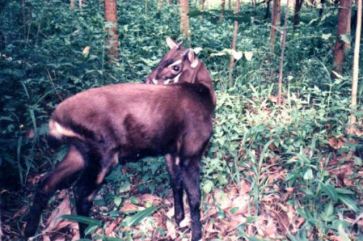
“Asian Unicorn” Seen in Vietnam for the First Time in 15 Years:  When asked where he’d been, the antelope replied:  “So we were going to lunch when I said, what, Mexican again?  If I eat one more chimichanga, I swear I’ll puke.  I’m a fucking asian unicorn‘Asian’ Unicorn, not a Latino unicorn.  So I said screw those guys, and left by myself for Mr. Wonton’s – they have the best egg rolls – and this fucking nun in  a station wagon ahead of me, she brakes for a bunch of baby ducks crossing the street – so I slam on my brakes, air bag deploys but I’m a fucking unicorn, you know, my horn pops that fucker, and I hit my head on the steering wheel – next thing I know, I’m wandering around a jungle in Vietnam, and they tell me it’s 2014 – say, is ‘Saved by the Bell’ still on?  That Screetch, he cracks me up!”
http://www.iflscience.com/plants-and-animals/%E2%80%98asian-unicorn%E2%80%99-seen-vietnam-first-time-fifteen-years

Scientists Create Transparent Mice:  Scientist Will Smith:  “I was, in my lab, able to create a new breed of mice so transparent that one of them actually said, to a female mouse, ‘I have a copy of The Notebook that was signed by Nicholas Sparks.  If you want to come by my labyrinth tonight, I’d be happy to show you.’”      http://www.iflscience.com/health-and-medicine/transparent-mice-allow-incredible-anatomical-views

What’s the most dangerous place on earth? Turns out it’s seated between two life insurance salesmen on a cross country flight to Eugene, Oregon       http://www.iflscience.com/environment/whats-most-dangerous-place-earth


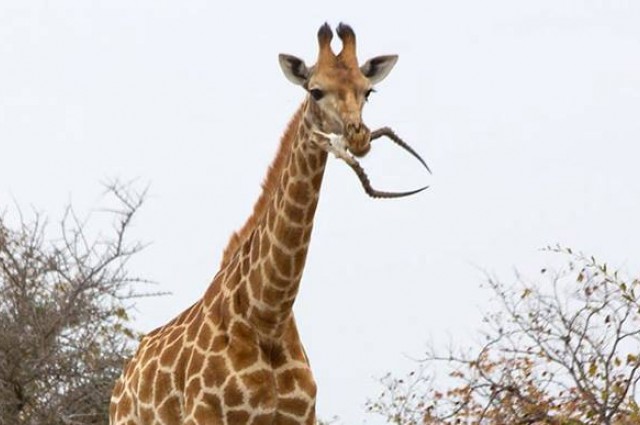
giraffe Why is this giraffe gnawing on an impala skull?  When asked , the giraffe replied:   “Because I much prefer the taste of the Impala skull, especially the late sixties to early seventies sedan models, to the Camaros and Chevelles.  I once tried the skull of a Buick LeSabre, and let me tell ‘ya,  I was in the bathroom for a week.”

http://www.iflscience.com/plants-and-animals/why-giraffe-gnawing-impala-skull

Strangest genitals on earth:  Whew!  I didn’t make the list! That’s a relief!

http://www.iflscience.com/plants-and-animals/strangest-genitals-animal-kingdom


The Forecast is …


Bleakness…  desolation …  plastic forks”

                                             –   Zippy  the Pinhead

Albert Einstein, considered by many to be the most intelligent man to ever live, once said this:  “The release of atom power has changed everything except our way of thinking… the solution to this problem lies in the heart of mankind. If only I had known, I should have become a watchmaker.”

Some genius.  Einstein figured out how to split the atom, then seemed surprised when that knowledge was used to create nuclear weapons. Even a moron should know that the “heart of mankind” is inherently evil and corrupt.

We’ve been the dominant species on the planet for what seems like a long time, but compared to the reign of the dinosaurs, it’s only been the blink of an eye.  Unlike the dinosaurs, we seem hell bent on destroying life, or at least wiping out our own species, as quickly as possible.  If it it’s not war or famine or pestilence, it’ll be nuclear annihilation or environmental catastrophe.

The big “intellectual” split these days is between science and religion, the two things that supposedly make us superior to the other species on the planet.  In truth, they are in fact the very things most likely to destroy us.  Science is killing us because technology advances so much more rapidly than our ability to manage it. Our capacity for grasping the mechanics of how the universe operates is exceeded only by our capacity for greed and our acceptance of corruption.

And don’t get me started on religion.  God was created by man, not the other way around, as a way for us to justify our destruction of the world and rationalize our complete incompetence in, as the dominant species, managing and maintaining some semblance of balance.  It is such a backward notion that it’s hard to believe that here, well into the 21st century, people still run around believing that some bearded guy sitting on a cloud determines their fate.  The oxymoron implicit in this backward and primitive institution is that religion, or religious differences, is the most likely reason that science, in the form of nuclear weaponry, will eventually be unleashed to annihilate us all.

“But we’re the only species that’s aware of our own mortality,” scientists and priests are both quick to argue.  Nonsense.  Every animal is born with a survival instinct – what is that instinct if not the knowledge that there are things that can kill you?   Animals see death every day, and I’d argue they understand it better than humans do.  They understand the role it plays in sustaining life and maintaining balance, and they do this without the help of Gods or holy books.  More importantly, they understand this with no need or grasp of economics or greed – they take what they need and move on.

I pity the human race.  We’re far too stupid to be shouldered with the responsibility we’ve been given.  The best thing for all parties would be for us to hurry up and get it over with, exterminate our sorry asses and let the rest of the planet get on without us.

It’s been said that after us cockroaches may take over – if so, then bring on the bugs.  Heaven knows they can’t do any worse than we did.

Empty


I’m empty.
Empty headed with
empty pockets
in an empty house.
 
I am filled with emptiness,
secreting and overflowing and
oozing from my pores.
I exhale emptiness with every breath,
 
filling the air and              
spreading the emptiness
through the streets,
through the trees,
like a hot and empty fire.
I am the arsonist
fueling the empty inferno
with my endless emptiness.
 
Empty seas
under empty skies.
Empty people
with dull and empty eyes.
Empty conversation
Empty gestures
 
Empty landscape
Empty sunset
Empty night
Empty dreams of emptiness
under empty stars in an empty void
until the empty sun rises
on another empty day
in another empty month
in another empty year
in an empty eternity.

Tables


(I wrote this a couple of nights ago, with no idea where it’s going, but it feels like it might be the start of something – who knows?)

Even after Aunt Nancy and Uncle Leon moved into town, they still hosted Thanksgiving, just like they did every year after grandma died.   Instead of their old farmhouse out on Highway C, they had it in the finished basement of their new house, which meant someone, usually Uncle Leon unless he’d already had too much to drink, had to maneuver Clifford and his wheelchair down the steps. Uncle Leon was round everywhere, in his stomach and in his face, and he was always smiling, a genuine, real smile, even when he was sober, although the smile grew bigger and Leon grew happier with each Korbel and water he drank.

Aunt Nancy would prepare all the tables, covering them with tasteful and festive holiday tablecloths, with little bowls of dry roasted peanuts or M & Ms in their center, long before anyone arrived.  She always had a table set up next to the northwest wall with extension cords all ready for my mom and Aunt Lynn to plug their crock pots and roasters into.   Every year, just as we were arriving, Aunt Nancy would get in her van and leave to go to the nursing home and pick up Clifford and bring him over. She’d wheel him out of the van into the garage, where Leon would greet him with his big grin and say, “Clifford, how the Hell are you?”

Clifford never responded to Leon. It’d been almost forty years since the last time Clifford responded to anybody.  But that didn’t bother Leon, who’d slap Clifford on the shoulder and then get behind his wheelchair, pushing him up  the step in the garage and thru the doorway into the house, and then round the corner to the carpeted stairs that lead down to the basement. Leon was a big man, but he always navigated the stairs with gentleness and grace, pushing Clifford one step at a time until he was at the bottom.

Once they’d made it to the bottom, Leon would bend over Clifford and unzip his jacket.  Then he’d gently and patiently take the jacket off, pulling it off one arm at a time, revealing a nice holiday sweater that Clifford had been given the previous Christmas, the sweater that one of the nurses at the nursing home dressed him in earlier in the day.  Clifford was fifty years old, with short bushy brown hair that had already turned mostly grey.  His face was lined with wrinkles, especially around his eyes, and he had a soft and plump belly.

Aunt Nancy, my mom, and Aunt Lynn were sisters, in that order, from oldest to youngest. Their dad, Grandpa Ray, was always the first to get there, around noon, driving over early in his Dodge Ram from his place on the lake so he and Uncle Leon would have time to have a drink or two together before everybody got there.  Grandpa Ray was a retired farmer, a small guy, about five foot seven, and by the time he hit his mid seventies, was even thinner than he’d always been.  He had a full head of white hair and there was nothing to him, he looked frail but there was something about him that was still physically imposing, something in the way he carried his slight frame that still said “don’t fuck with me.”

Aunt Lynn and her husband, Uncle Dale, had two boys that were three years apart, just like me and my sister, with Eddie a year younger than me and Jimmy a year younger than Eileen.   They lived in Kennan, over in Price County, about an hour east from Aunt Nancy’s house in the town of Neil.  Aunt Nancy and Uncle Leon didn’t have any kids.  Uncle Dale and Aunt Lynn usually had to leave early, in time for Dale and Eddie to set up deer camp in their cabin east of Phillips, so they could be out in the woods bright and early Friday morning.

Last April, at my dad’s funeral, Uncle Dale invited me to deer hunt with him and Eddie.  Jimmy was still too little to go. “You don’t have to give me an answer now,” he said, “Whenever you’re ready, it’s up to you.  I just want you to know you’re always welcome with us.”

I appreciated the offer.  Uncle Dale was a good guy, and I liked Eddie and Jimmy, even though sometimes Jimmy could be a pain the ass.  It was just that deer hunting was something I always did with my dad, and without him, it just didn’t make sense.  I think Uncle Dale understood this when I told him up at the lake last summer that I didn’t think I wanted to go deer hunting this year.  We were out on his pontoon boat, him and Aunt Lynn and Grandpa Ray and my mom and Eileen and me. Uncle Dale was sitting next to me, at the steering wheel, and he just nodded his head and took another drink from his beer and tousled my hair and said, “That’s okay.” I was fifteen years old, too old to have my hair tousled, but for some reason it felt right, for some reason I liked it.  I looked up and from across the boat my mom was staring at me, her eyes watery.

My mom and her siters Nancy and Lynn had a brother, Conrad, who lived out west somewhere, I think in California.  He never got back to Wisconsin, not even for dad’s funeral, and whenever my aunts got together, if his name was mentioned, they’d all roll their eyes and sigh. I had only vague and distant memories of Connie, as my mom and her sisters called him. I seem to remember him at my grandma’s funeral, I remember him as tall and thin and nervous, but I can’t be sure.  I was only six years old, so that was nine years ago.

We hung around for a while, killing time before the meal was served, the adults drinking beer or mixed drinks, us kids drinking the discount soda Aunt Nancy always stocked up on for the occasion.  Football was on the old console television set, the Dallas Cowboys and the Philadelphia Eagles.  All of the guys were sitting on the sofa and love seats in front of the television, watching the game, while my sister, Eileen, was upstairs in the kitchen with my mom and my aunts. Uncle Leon had already pushed Clifford up to his spot at the main table.  He sat there, alone, next to the head of the table, between where Uncle Leon and Aunt Nancy were going to sit, the same place he sat every year. His expression never changed, he never moved, he just stared into space, like he was a statue that had been sculpted out of flesh and blood.

It didn’t take long before Aunt Nancy came back downstairs and told Uncle Leon to get everybody to the table.  I should say tables, because there were still two eating tables, an adults table and a kids table.  Even though I was the oldest, even though I was fifteen and almost six foot tall, I still had to sit at the kids table. I felt like saying they should move Clifford to the kids table, it wouldn’t make no difference to him, he doesn’t eat anything anyhow, but I knew better.

I’d thought of asking if I could take my dad’s place at the big table, but for some reason I didn’t. It didn’t feel right. I didn’t know how to ask without it feeling wrong, but now, as I sat with my sister and my cousins at the kids’ table and looked at the chair at the adults’ table next to my mom, it was so empty that I almost wanted to cry.

“I wonder if old Clifford’s going to pee his pants again,” Jimmy snickered in hushed tones. He’d just turned ten years old and his hair was still the same reddish brown that his brother Eddie’s used to be until he outgrew the red and it was just brown.  Eddie also grew out of his freckles, but he never had as many as Jimmy does.  I think Jimmy will always have freckles.

“Grow up, Jimmy,” Eddie said

Jimmy wasn’t done.  “My mom says he wears a big diaper under his pants.”

“What’s wrong with Clifford?” Eileen asked. “Mom told us, but I can’t remember.”

“My dad says he’s a gin and tonic,” Jimmy said. Eddie and I both laughed out loud.

“Not a gin and tonic,” Eddie corrected his little brother. “He’s a cat and tonic.”

“Well, he don’t look like no kitty to me,” Jimmy said.  We all laughed.  Jimmy was smiling that goofy freckled red-haired smile of his that made everything he said even funnier.

I was sitting at the left side of the kids’ table, across from Jimmy. Looking past Jimmy I could see the adults’ table, and I could see Clifford, sitting as still and motionless as always, with the plate Aunt Nancy had fixed for him, with turkey, stuffing, cranberries, mashed potatoes, and a biscuit sitting untouched in front of him. Every year Aunt Nancy would heap a plate full of food and place it in front of Clifford, and every year Clifford just sat there, staring out into space, his big blue eyes moist and expressionless.  I looked at my mom and the empty place beside her.  No one fixed a plate up for my dad. It didn’t seem fair, Clifford being too far gone to appreciate Thanksgiving yet getting a plate filled with food while my dad, who always loved Thanksgiving and leftover turkey sandwiches so much, not even getting a whiff of Aunt Nancy’s turkey or any of the other casserole or vegetable dishes steaming in the empty air above the table.  It’d been only seven months since he jackknifed his semi and tipped it over on a rural highway in Ohio. It was night, he came around a curve and there was a cow, a calf, really, standing in the middle of the road.  He hit the brakes and swerved, and then he was dead.  They said he died of “massive brain trauma,” which was a fancy way of saying his brains were smashed and crushed against the black pavement.

After we were done eating dinner, Uncle Leon wheeled Clifford upstairs, and Aunt Nancy put him in her van and took him back to the nursing home.  Uncle Leon came back downstairs.   He was standing behind the bar he’d built. Uncle Dale, Grandpa Ray, and Aunt Lynn were sitting across from him on stools, drinking and talking grown up stuff and laughing grown up laughs. Uncle Dale and Grandpa Ray were smoking; the smoke from their cigarettes hung like clouds in the air above their heads and beneath the basement’s dropped ceiling.  Eddie and Jimmy and Eileen had gotten into Aunt Nancy’s collection of board games and were playing the game of Life.  Being fifteen and too old for board games, I sat out and watched, until I lost interest.

Bored, I wandered upstairs, to the kitchen, where I expected to see Aunt Nancy and mom washing dishes, but instead the kitchen was empty. Dirty dishes were piled high on the counter.  I walked through the living room and Uncle Leon’s office, but they were both empty, too.  I started down the hallway when I heard them, the sounds coming from Aunt Nancy’s bedroom.  One of them was crying, and the other one was talking soft and soothing.  I’d heard this before, when my dad died, only then it was my mom who was crying.  This time I recognized my mom’s voice, and I could tell it was Aunt Nancy crying. I heard the words “cancer” and “pancreatic,” and I decided I’d heard too much and went back downstairs.  Eddie and Jimmy and Eileen had finished their game of Life, and were setting up for a game of Clue, when Eddie asked me if I wanted to play.

“Sure,” I said, and sat down with them at the kids’ table, where words like cancer and pancreatic had no power or meaning.

Today


Today was a good day.  I felt pretty good most of the day, and my wife was off work, so we were able to spend it at home, together.   The weather was beautiful – sunny, a little cool for July, and dry.  We were both up by 6:30, and spent the first couple of hours waking up and reading, coffee and toast for breakfast.  I did my daily Parkinson’s disease stretches, and by 9:30 I was moving pretty good, and I went outside.

First, I took the empty gallon iced tea jugs I’ve been saving out to my workshop, and funneled the old used motor oil I had lying around in various containers into them.  Two or three more empties and I’ll have all of my old oil accounted for, and I’ll take it in to the recycling center the village has established.

Then I put the new tire I’d bought at the True Value store a couple of days ago on the wheelbarrow, replacing the old one that wouldn’t hold air anymore.  Then I weeded my vegetable garden while my wife weeded her flower garden.  Tomatoes are starting to come in.  That’s exciting.

Then I burned some brush, some yard waste we’d accumulated over the summer.  It was the second of four brush piles we’ve burned; the other two are probably still a little bit too green to burn just yet.

I emptied the garbage can in my workshop into the main can we take to the curb on Tuesdays.  It was pretty full, it was past time I remembered to empty it, so that’s taken care of.

For dinner, I grilled out, bratwursts, a true Wisconsin delicacy.  We ate, then my wife worked some more in her flower garden, while I read.  We came in, she gave me a much needed haircut, and we played our nightly game of Scrabble (she won – AGAIN).  Now it’s 9:30 and getting dark, and I’ll try to get an hour or two of writing in before I go to bed.

Tomorrow, Deb goes back to work, I tutor for the literary council in the afternoon, and I have a meeting with my writer’s group tomorrow night.

This may all sound pretty routine and boring, but for me, it’s as good as it gets.  I love days like this, when I feel good enough to get some jobs, admittedly small jobs, done and crossed off of the list.  I know it’s a fraction of what I used to do every day, but I also know I can’t do most of those things anymore.  And to be honest, on some of the days that aren’t this good, the bad days, I sit alone most of the day and brood about that.

It’s more than coincidence that my wife was home and that I had a good day today.  There’s a definite correlation.  It’s not that we did anything special together or even left the yard.  It’s the fact that she is here, near to me, that matters.  It’s the comfort I take in her presence, looking out the window and seeing her in her flower garden, and showing her the green tomatoes coming in in my garden that means so much to me.  After 33 years together, we’ve become more than best friends, more than partners, more even than soul mates.  We’re tied to each other, inextricably linked.  We are companions.

While the number of good days left slowly counts down and diminishes, the appreciation and enjoyment of each one increases.  Days like today are truly remarkable and meant to be treasured.  The sun  on my face in my backyard, the sound of the breeze through the trees, the feel of a wrench in my hand while tightening the bolts on my wheelbarrow, and the image of my wife in the midday golden, green,  and red of her flower garden, are all more perfect than anyone can ask for.

Helicopter Seeds


(Just a quick paragraph I wrote today from my novel-in-progress.  Kind of like the images it conjures up for me.)

It was only a half day, the last day of school of my third grade year.  We had early dismissal and as we ran out the doors into the early afternoon sunlight, a strong wind kicked up out of the west and blew thousands of helicopter seeds off of the gigantic maple tree that bordered State Street.  They filled the early afternoon sky, some travelling hundreds of feet as they silently took flight, spinning and whirling, landing on the asphalt of the playground and the dark green and freshly mown grass of the neighboring lawns.  And we all ran, all the kids from the old grade school, as if we were helicopter seeds, too, set free from the walls of the school by the warm June wind into the early summer air that was never before and would never again be as pure and clean as it was at that moment.  It was the most perfect expression of pure freedom I’ve ever known, the helicopter seeds and we children, none of us caring about where we’d end up when we finally landed, just lost in release and flight, happy to go wherever the warm wind sent us.