Still Drivel After All of One Year


If we mark the birth of this site as the date and time of the first posting, then at 22:37:55 on May 5th, “Drivel by Dave” will officially be one year old.

How best to commemorate this momentous event?  My first thought was to go Hollywood and hold a glamorous award show.  I bought some red carpet and a stunning, low cut gown (not unlike the one Angelina Jolie wore at the Oscars this year) designed by Armani (or by an Armenian, the label was faded).  I spread the carpet down my driveway, put the evening gown on, and no sooner had I started my stroll through the paparazzi that the Police showed up.  They had received two calls, one from one of my unenlightened neighbors who called to complain that there was a bald headed man in the street wearing an evening gown, and one from an Armenian who called to complain that there was a bald headed man in the street wearing an evening gown that he had designed.

Here are some of the vital statistics from my first year:

77 posts

4,223 page views

47 different countries

389 views on my busiest day (February 26, 2012)

The 5 Most Viewed Posts:

1.  “Bring on Your Wrecking Ball”  (Springsteen fans are scary – I thought I was a fanatic!)

2.   “Clint Eastwood and the Mythology of the American West”  (This one keeps being googled by what appears to be students writing term papers – if they are citing my essay, I would sure hate to see what kind of grades they get!)

3.  “The Mathematics of Loss”  (A tribute to how well liked my Dad was, and how many lives he touched)

4.  “Parkinson’s and Grief vs Self Pity”  (I hope this was helpful in some way to some people)

5.  “It Was Thirty Years Ago Today”  (Probably people who know my wife and are still wondering, all these years later,  just what in the Hell does she see in him?)

I’ve posted 77 pieces in 52 weeks, or an average of about 1.5 per week.  If you’re into quantity, you might think that is a pretty impressive pace.  If you are into quality, then that pace may explain a lot.  The subject matter has varied, the amount of effort put into the posts has been inconsistent.  My goals remain the same:  for the reader, not to waste too much of the your time and maybe even entertain you a little bit, for me, to keep me writing and to help me continue learning and polishing craft.   I think I did pretty good in following my rules of 1) avoiding politics and 2) being as honest as I can.

All told, after a year of doing this, I think I have a little bit better idea of who I am (and who I am not)

I’d be interested in whatever comments anybody might have, likes or dislikes, things I might want to do differently, plastic surgery I may want to consider, whatever comes to mind.

Now, drum roll please, the moment you’ve all been waiting for:  The first annual Drivvies, where I pick my favorite posting in each category.  I’d be interested in what you, all three of my dedicated readers, have to say:

Favorite Fiction – “That Would Be Nice”

This is probably the weakest category, and paradoxically, the one I am currently spending almost all of my time in (after several starts and stops, I’m hard at work on a novel these days).  I still have a tremendous amount to learn about fiction writing, and feel that I am just now really learning how to tell a story.  The fiction I’ve posted so far is weak on story development (among other things) – a perfect example being “That Would Be Nice”, which is really a character sketch and not so much a “story.”  As such, it’s probably a little bit better and more efficiently written than the other postings in this category.

Favorite General Essays – “Vulture”

This is another weak category, and I lumped a whole lot of crap into it.  I am going to pick “Vulture” because I think it is pretty tight and honest.

Favorite Humor – “My New Year’s Resolutions for 2012”

If only because number 3 (“Learn the proper way to fold a map of the cities Portland and Eugene and their surrounding areas (also known as the art of “Oregoni”)”) and numbers 17 (“Remember to always go the extra mile”)  and 18 (“(Related to #17) Always carry a GPS with me, so I can find my way back after going the extra mile”) for some reason still make me laugh

Favorite Memoir – “The Mathematics of Loss”

Some of my best writing has been about my Dad, because he was such a wonderful man, and I always loved him so.  I still can’t believe that the day he died, I went home and wrote this one.   There isn’t a day that goes by that I don’t think of him.

Favorite Parkinson’s Disease essay – “Parkinson’s and Grief vs. Self Pity”

It was between this one and “Heaven and Hell.”  I chose this one because I think it pretty accurately sums up my experiences in the early phases of the disease, when the emotional and psychological aspects of knowing there is something wrong with you are more prevalent than any physical challenge.

Favorite Review – “My Favorite Movie”

Much of what I put in this category aren’t really reviews, but just lists of things that have had an effect on me.   “My Favorite Movie” is probably as close to a real review as I’ve posted, so it gets my vote.

The DBD Lifetime Achievement Award for Most Dedicated Devotee to Drivel: 

Who else but my Aunt, Phyllis Mae Stevenson, the retired school teacher who I can always depend upon for a comment, and who has been unwavering in her support.   All the more impressive when take into consideration the fact that I have always been her least favorite nephew.
 

Forgotten Carnival


I post on this site, from time to time, some of my experiments with short fiction.  I recognize that they aren’t very good, certainly not good enough for publication (I have written a couple of pieces I haven’t posted to this site yet that I hope are worthy of publication and submitted them to various literary journals, so far, to no avail).  I do find some value in them, however, as exercises in trying to learn the craft of short fiction writing.  I am vain enough to aspire to writing something memorable, and humble enough to know that I still have much to learn.
As a neophyte, and as a devoted fan of the art form, I am sensitive to when I am making use of tired clichés and a lack of originality.   Two of the short stories I’ve posted on this site (“Highway Q”, of which I’m quite embarrassed, and “Night Watchman”, which is if nothing else better than “Highway Q”) rely upon that tired old plot device of the main character not knowing he is dead.   When I wrote these stories, I thought I was ripping off things like Ambrose Bierce’s great short story “An Occurrence at Owl Creek Bridge” (which, in “Highway Q”, I was) and movies like “The Sixth Sense” or “The Others.”  In all honesty, this wasn’t my intent when writing either story, and I remained somewhat mystified at why this was an attractive plot device to me.   Last night, something triggered a memory for me, and I think now I know where my fascination with this cliché came from.

I was 12 or 13 years old, and it was the last day of school, the best day of the year.  School being out meant summer and baseball and sleeping in and, best of all, it meant staying up late at night.  That year, on the first night of summer vacation, a Friday night, I vowed to stay awake for Nightmare Theatre, with Dr. Cadavarino, on channel six, sometime after midnight.   I didn’t quite make it, falling asleep on the couch, but I woke up in time to see black and white footage of a strange woman wandering through a deserted carnival.  I had missed the beginning and the name of the movie, but I saw enough to realize, by the end, that the woman was dead and didn’t know it, and I saw enough to be genuinely creeped out.

I never saw the movie again until last night, when I stumbled upon a title and read the synopsis.  Intrigued, I found that the movie in its entirety is on You Tube, and I watched it, and I am pleased to announce that the movie remains as creepy to me now as it did then.  The movie is the original, 1962 Carnival of Souls, a low budget ($33,000) horror film directed by someone named Herk Harvey.

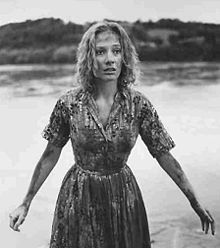
Carnival of Souls begins (the part I was asleep for all those years ago) with a drag race between a car full of young men against a car full of young women.  The cars end up on a rickety old bridge over a river, and the car with the women goes off and crashes into the water below.  While authorities dredge the river to no avail, a little ways downriver one of the women emerges, shocked and soaked.  She has no memory of how she survived the crash.

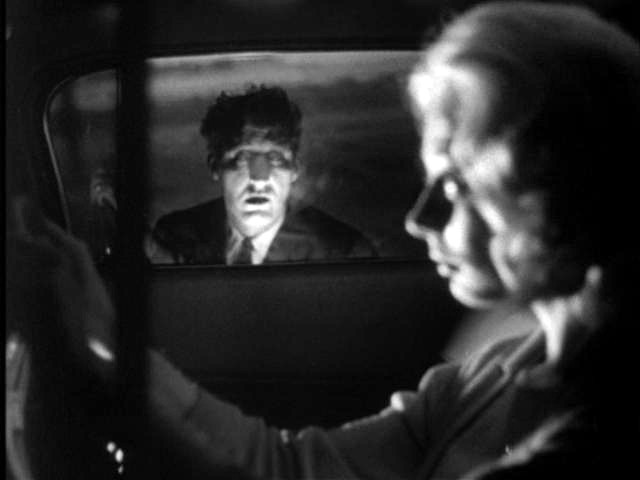
In a great plot device, we learn that the woman’s occupation is a church organist, and she’s been hired by a church in Utah to play their enormous, creepy pipe organ.  She leaves her hometown, vowing to never come back, only a couple of days after the accident.  Driving at night on her way to Utah, strange things begin to happen.    First, her car radio starts to play strange organ music.  She tries to change the channel and shut the radio off, but the same music continues to play.   Then she has her first encounter with a strange ghoulish-faced man, this time replacing her reflection in the passenger window and staring at her.    She passes by an abandoned amusement park and is strangely attracted to it.

She gets to town and rents an upstairs room in a small boarding house.  Just as she hopes to settle in and start a new life, things start unraveling, and she appears to be going mad.  Aside from additional visits from the ghoulish man, she experiences periods where she is seemingly shut off from the world, where there is no sound and nobody can see or hear her.   She ends up at the deserted amusement park, and sees dead people dancing to the organ music in a dance hall.  She tries to flee from them, but they chase her, and she collapses on a beach with them closing in on her.  Then the movie cuts back to the river, the dredgers have found the car, and her dead body is in the front seat.

Prior to the 1970s, before advances in visual effects, before The Exorcist, horror movies had to rely primarily upon atmosphere to frighten audiences.   The notable exception to this was Alfred Hitchock’s Psycho, which included graphic violence (the famous shower scene, which is brutal despite the fact that the camera never shows the knife touching Janet Leigh’s body) and explicit shock (the shot of Mother’s rotted corpse at the end).  But these exceptions were rare, and even bigger budget horror movies of the time (like Jack Clayton’s “The Innocents” and Robert Wise’s “The Haunting”) were rich in mood and atmosphere.  The only advantage these big budget films had over the low budget films was that they could pay for better writers and directors and actors.   The result is that occasionally, low budget horror films were able to compete with and often times surpass their big budget rivals.

And there were certainly enough horror films being made in the 1960s.  There were the famous William Castle and Roger Corman B-movie products, as well as the Hammer studio films starring Christopher Lee and Peter Cushing.  Possibly the greatest horror film of the time, George Romero’s “Night of the Living Dead”, was a low budget, independent film made in Pittsburgh.  Romero’s genius was in that he let the lack of a budget work in his favor, the grainy black and white footage and the straight forward story telling approach and the use of amateur actors all resulted in a  heightened realism, making the attack of flesh eating zombies more urgent and realistic.

Carnival of Souls is similar in that the low budget cinematography, the amateurish acting (although the actress playing the lead, a Candace Hilligoss, is actually quite good, and brings a surprising range to her performance) and the simple but tight script and direction work and result in a whole that is greater than the sum of its parts.   Harvey’s direction is top notch, as he uses the camera efficiently but creatively to convey the woman’s psychological state and maintain a consistent eerie atmosphere.   He brings a level of storytelling and sophistication that is unexpected in a low budget production.

The thing I find interesting in all this is that I had seen this movie once, about 40 years ago, and never knew the title, and never thought that much about it, until last night.  Yet it stayed with me, buried in my subconscious,  influencing what I’ve been writing.   It makes me wonder what else is buried in there.

I Am Smoke


(I should probably explain – this is an attempt to describe a dream I had after a frustrating day with Parkinson’s.  In the dream I was literally smoke from a fire, moving freely through the air.  I’ve had a few of these dreams now, usually on my more rigid days, and they always feel wonderful)

I wake in the diminishing daylight and I am smoke, rising from red burning embers in a campfire in an open field on the top of a high ridge.  I rise higher and higher above the red and blue flames and the white hot coals, leaving the warmth of the fire and floating on the breeze, feeling the chill of the late afternoon air, above and over the trees, carried on the breeze, dissolving into the wind, until I melt into and become the wind, making the leaves on the trees tremble and shake.   I move out past the ridge and over the river, pushing small blue lines that silently glide across the water.  The trees that line the water’s edge are leaning and bowing in silent deference to me.   I lift dead leaves from the ground and breathe life into them, making them dance in the cool air.  I make flags wave and I whisper through pine trees.    I am silence and grace, I am young and old, I am familiar and comforting, and threatening and foreboding.  I am life and I am death.  I am the sum of my contradictions.

I find her, working in her garden, and I wrap myself around her.  She bundles her jacket tight around her shoulders as I move through her hair, lifting and caressing it, until she turns around, and I caress her cheeks and I fill her lungs. I brush her skin and make goose bumps rise.  I taste her and she tastes me, and she becomes fire, ignited by my breath, and I am the smoke she exhales from her red and blue flames.

List-O-Mania: Films of the 1970s


The 1970s was a traumatic decade in the U.S. A.   The first half of the decade was dominated by historic failure – 1974 saw our president resign in disgrace, and 1975 saw the fall of Saigon, the official end of more than a decade of U.S. involvement in Vietnam.   Post 1975 was dominated by economic issues, as we started to lose our grip as the leading economic super power.  We were throttled by runaway inflation and gas shortages and rising interest rates.  There was the emergence of serious automotive competition from Japan, and the start of the decline of our textile and steel industries.    

Culturally, the 70s is remembered as an age of hedonism, of sexual freedom and casual drug use.    The writer Tom Wolfe summed it up best when he referred to it as “the Me decade.”     The culture of self absorption was summed up in popular music, with the early 70s dominated by the laid-back, California sounds of the Eagles and singer songwriters like James Taylor and Jackson Browne, and the late 70s dominated by the pulsating beat of the disco explosion.  Punk rock came around in the mid 70s as a form of rebellion against both of these forms.

As mediocre as much of the music output was, film was going through a renaissance, with the emergence of some of the greatest American filmmakers ever.   The 70s saw young directors like Martin Scorsese, Francis Ford Coppola, Steven Spielberg, Robert Altman, Terrence Malick and John Boorman  making some of their most innovative and personal films, stretching  boundaries and bringing the influences of rock and roll and the French New Wave movement of the 1950s to mainstream Hollywood.   Woody Allen transformed from brilliant comic to serious and talented filmmaker.  Giants like Stanley Kubrick and John Huston continued making great films.  Robert DeNiro and Al Pacino and Jack Nicholson established their places with the greatest film actors ever, and Faye Dunaway and Jane Fonda were not only brilliant actresses but also pioneers, breaking down barriers, challenging stereotypes, and changing perceptions of women in film.

 For me, film in the 70s can be divided between the personal and introspective films of Scorsese (Mean Streets, Taxi Driver) , Coppola (The Godfather, The Conversation) and Altman (McCabe and Mrs. Miller, Nashville) and the emergence of the big budget, special effects, sensory orgies of Lucas (Star Wars) and Spielberg (Jaws, Close Encounters of the Third Mind).  In fact, one film strived to combine these two genres with exhilaratingly mixed results, Coppola’s Apocalypse Now.

The fact that the Lucas and Spielberg extravaganzas were huge box office successes would have a profound effect on how films would be made, marketed and distributed in the decades that follow.  Unfortunately, the personal and introspective films that Hollywood liberally produced in the early 70s would become few and far between, with sequels to big moneymakers taking their place.

My favorite film of the 70s is Roman Polanski’s Chinatown, which is more than a homage to the great 1940s detective films, it takes its place alongside The Maltese Falcon and The Big Sleep as the best the genre has to offer.   Although it takes place in the 40s, the film is really about the 70s – its story, centering on the manipulation of the Los Angeles water supply, suggests the government scandals of Watergate, and the self absorbed and murky morality in Robert Towne’s screenplay neatly echoes the confused chaos of the time.  Throw Polanski’s atmospheric direction, and great performances by Jack Nicholson and Faye Dunaway into the mix, the result is pretty damn close to perfection.

Here’s my list of favorite films of the 70s:

20.  Jaws (1975), Directed by Steven Spielberg

19.  Manhattan (1979), Woody Allen

18.  Close Encounters of the Third Kind, 1977, Spielberg

17.  Network (1976), Sydney Lumet

16.  Deliverance (1972), John Boorman

15.  The Godfather (1971), Francis Ford Coppola

14.  Dog Day Afternoon (1973), Lumet

13.  Wise Blood (1979), John Huston

12.  One Flew Over the Cuckoo’s Nest (1975), Milos Foreman

11.  Days of Heaven (1978), Terrence Malick

10.  The Conversation (1973), Coppola

  9.  Nashville (1975), Robert Altman

  8.  Mean Streets (1973), Martin Scorsese

  7.  Taxi Driver (1976), Scorsese

  6.  Apocalypse Now (1979), Coppola

  5.  The Godfather Part 2 (1974), Coppola

  4.  The Man Who Would Be King (1975), Huston

  3.  Annie Hall (1977), Allen

  2.  A Clockwork Orange (1971), Stanley Kubrick

  1.  Chinatown (1975), Roman Polanski

Kids These Days


Last night, my wife and I attended Choral Fest, the annual concert given by all the student choirs in the Kenosha Unified School District.  Each choir performed separately, and there were several numbers where the combined choirs, under the direction of a guest conductor, joined and sang as one combined choir.  It was, as it has been every year I’ve attended, an impressive and stirring concert.  There’s something incredibly beautiful about the sound of human voices singing live.

My wife and I were there to watch our daughter, a senior in high school, perform as a part of her school choir.   My daughter is the youngest of our three children, and it occurred to me, as the concert went on, that we are nearly done, my wife and I, that we are rapidly approaching the end of a long line of events we’ve been attending for the past twenty four years or so.  From preschool Christmas programs to youth sports leagues to award ceremonies to graduations, we’ve sat in auditoriums or sidelines more times than I can count.   Soon that will be over, and we won’t have to suffer through crowded amphitheatres and uncomfortable bleacher seating and the inconvenience of the inevitability of the event falling on the same evening something else was planned.

One constant that I’ve heard adults complain about over the years, starting with my parents, is “kids these days.”   I’ve been guilty of using this phrase myself.   Amongst the crimes “kids these days” have been accused of over the years are:

–  Having no respect

–   Not understanding the value of a dollar

–   Being lazy

These have always been, of course, legitimate complaints.   Kids have always disrespected their elders, they’ve never understood the true value of a dollar, and, if not pushed, have always been lazy.  These are and have always been among the fringe benefits of being a kid and things like respect and a work ethic are things that have to be learned.  The part that the complaints get wrong is the “these days” part, as if these are sudden attributes that have only become evident with the latest generation.

As I watched the concert last night, it occurred to me that kids these days are really no different than kids ever were.  Sure, they may be better at video games and understand technology better, and they might not have to work as hard as kids say, 100 years ago, but these are environmental and cultural shifts.  At their core, where it matters, they are the same as they ever were.   They are still kids.  Scanning the assembled choirs last night, I noticed that they still come in all sizes and shapes, they still, when it’s not their turn to sing, have trouble sitting still, and they still have best friends that they whisper things to that make them laugh.  I recognized, in some of the boys, the same longing glances at pretty girls that they have secret crushes on that I used to hope nobody noticed, and I remembered the mysterious combination of fears and dreams the world was when I was in 9th grade.  It was easy to spot kids who were popular and kids who were not, kids mature beyond their years and kids who were struggling to contain their immaturity.  These are the things that have always made being a kid both wonderful and painful, both simple and complex.   These are the things that kids need parents for.

As my wife and I drove home from the concert, I thought about all of this, and I thought, our time is over.  There will continue to be school concerts, softball and basketball games, graduation ceremonies, but we won’t be part of them.  Kids will still be kids, and parents will still be parents, but whatever role my wife and I played in this cycle is just about complete, and at some point our children will become parents, and it will be their time.

This morning, I ran to the grocery store to pick up a few items, when I ran into the mother of one of the children I used to coach in recreation league softball.   It was the first time I had seen her in years.   Her husband, who used to occasionally help me out with coaching duties, died unexpectedly a few years ago.    Their son Jimmy was one of my all time favorite kids, sweet and funny, a good player, always respectful and courteous and well mannered, always with a beaming smile on his face.  When I talked to her in the super market aisle this morning, I expressed my condolences about the loss of her husband, and asked her how long it had been.   She said it was in 2006, nearly six years already, and I couldn’t believe it had been that long.  I asked how Jimmy was doing, and she said great, although she wished he could find a job.   She then asked me about my son, and I replied he’s doing well in college, that he is in his second senior year, to which she replied, he always was such a smart boy, and I said, just like a Father, if he was so damned smart he’d be out of school by now.

We said goodbye, and I continued on to the check-out and then drove home, thinking about her and her son and her late husband.   He was such a good guy, and his wife and son are such good people.    I can’t comprehend the depths of their loss, and I can’t comprehend what it would mean to be taken so soon.

Then I thought about the conclusion I had come to after the concert last night that our time is over, and I realized how wrong I was.   My wife and I will always be parents to our children; it’s just that the role changes, that’s all.   Children will always be children, and parents will always be parents, and if nothing else, as we go on, my job will be to make sure that this is understood.

Snow Day


It had started snowing late the night before, and it continued through the Saturday morning, ending just about noon.   All told we got about three inches of the stuff.   I was 23 years old, and we were living in the upstairs apartment on 18th Avenue at the time, and we had nothing to do and nowhere to go for the rest of the weekend.

Shortly after noon, after it stopped snowing, I put on the old army fatigue jacket that Jack Anderson had given me about three years earlier, a stocking cap, a pair of gloves and my rubber boots.  On the back landing, just outside of the entrance to our apartment, I grabbed the little metal snow shovel and began clearing off the steps of the stairway.   It was cold but not too cold, probably in the low twenties.  It felt warmer when the clouds moved out and were replaced by the bright January sun.  The snow was light and powdery, and I felt good as I moved to the bottom of the steps.

Next, I cleared the little gravel driveway we shared with the woman who rented the downstairs apartment.  Once I had finished that, I started on the sidewalk in front of the house.  Compared to the rutted gravel of the driveway, the sidewalk was a breeze, and I was able to quickly get to the end of the property line.  The house the apartment was in bordered a vacant lot that was the corner of 18th Avenue and 45th street.   I had been outside only a few minutes and had cleared the back steps, the driveway and the sidewalk in front of our house.  I felt good and had nothing else to do, so I figured, what the Hell, I may as well keep going.

I cleared the sidewalk to 45th street, then, heading east, I cleared the 45th  street side of the corner lot.  When that was done, I found myself in front of another old, two story house, with sidewalks and a driveway hadn’t been cleared yet.  I felt good, and I didn’t want to stop, so I kept going, and started on the sidewalk in front of the house.  About halfway thru, the front door opened.  An old, frail man I had never seen before  stood in the doorway.

“Thank you”, he said.

“Don’t mention it”, I replied.

“Would you mind doing my driveway, too?”

“Sure, no problem”, I said, quickly surveying the short, cement two care driveway.  With the snow this powdery and light, I figured I could knock it off in a few minutes.

“Thank you so much”, he said, and went back inside.

I quickly finished the sidewalk in front of his house, and it didn’t take me long to do his driveway.  Every now and then I’d glance to the window, and each time he was standing there, stooped over, watching me

I finished the driveway and turned my attention to the short cement walkway that ran from the sidewalk to his front porch.  I made quick work of it and just as I was finishing up, the front door opened again. My guess was that he was going to offer me a few bucks for my work.

“Thank you again,” he said.  “When you finish up, why don’t you come inside for a few minutes”

I nodded my head and he closed the door.  It was only a couple of more minutes when I finished.  Standing on the steps to the front door, I was just about to knock when it opened.

“Come on in, come on in.”  I stepped in, and he took my coat and I took off my boots.  He motioned for me to sit in a chair in his living room. Then he went to the kitchen.  He came back with two glasses filled with a golden brown liquid. 

“Cold out there, huh?”, he said, handing me a glass.

“Not too bad”, I said.

“Well, drink some of this, this’ll warm you up.”  He sat in a chair across from me.  It was warm and very good.  I was able to recognize it as brandy. 

We sat there in the warmth of his living room, surrounded by framed photos of what I assumed to be children and grand children and great grand children.  The room looked like it belonged to a bygone era.  We talked about the cold, we talked about his health – there was something wrong with his lungs that made breathing cold air difficult – but mostly he talked about brandy and how whatever kind it was that we were drinking was top of the line stuff.  When the first glass was finished, he bought me a second glass, this one of a different, more famous make of brandy, and he explained to me why the second one was inferior to the first.  I didn’t know anything about any of that; I just knew they were both warm and good. 

We sat and drank brandy and talked for about a half an hour.  After I had finished the second glass, he offered me a third, which I politely declined, saying if I drank any more I might not be able to find my way around the corner to home.  I got up and put my boots and coat on, and as he thanked me again, I took one last look at his living room.  It was so warm and comfortable.  There has always been something sacred, something even holy, about people’s living rooms, especially the ones belonging to strangers who invite you in.

It was about 3:00 when I left and started back for home, feeling a little bit of a buzz from the brandy and a contented ache in my bones from the work and the cold air.  The sun was still out but lowering in the west.  I grabbed my shovel and walked back home.  I was 23 years old, and the future lay out before me like an undisturbed coat of fresh snow on an endless city sidewalk, waiting to be uncovered.

Parkinson’s and Grief vs. Self Pity


“Grief is a process where nothing remains the same, even the big stuff, and none of it, sadly, fits back inside that old, comfortable box.”   – Peg Rousar-Thompson

 A few years ago, fearing that I may be suffering from the depression that is common with Parkinson’s disease, I went to a therapist for a brief time.   This was about the same time I had started to write, as a way to fill the hours I suddenly found myself awake for in the middle of the night.  After a few sessions, the therapist and I agreed that I wasn’t depressed.  If anything, I may have been suffering a slight case of anxiety, and by writing I was probably already engaged in the most effective therapy.

Our time together was extremely helpful anyway, if only for a very revealing exchange early in the first session.  I was trying to explain what I was going thru, when I said “I don’t want to sound like I’m feeling sorry for myself, but …”

She stopped me in mid-sentence.  “Why don’t you want to feel sorry for yourself?”

I stuttered and stammered, when she said, “Why wouldn’t you feel sorry for yourself?  You’ve got Parkinson’s disease.”

I was stunned.   It’s not that I hadn’t felt sorry for myself before; I had, plenty of times.   After all, I was only in my mid 40s when I received my sentence, my diagnosis.  It’s just that it hadn’t occurred to me it was okay to feel sorry for myself.   I think this was when I started to understand the difference between grief and self-pity.

They say then that one of the first things people go through after being diagnosed with Parkinson’s is a period of grieving, or mourning.  I think this is common for the diagnosis of any chronic disease.  Suddenly you are flawed, and the image you held of your future self is dead.  With a sentence of Parkinson’s comes the awareness that things are going to be different now, and that the days still left will be days of diminishment and loss.  It’s only natural to grieve for these losses.

There are also the expectations of how one is supposed to behave under these circumstances.  To understand these, one only needs to stand in the line at the supermarket and read the headlines of the National Enquirer.

One of the stories the Enquirer has been most successful with over the years has been the famous celebrity stricken with a terminal disease.  The story always follows a similar arch – how tragedy strikes when least expected, often times just as the celebrity has finally found some peace in their life, then on to the courageous and inspirational struggle, complete with some short-lived triumphs, followed by the shocking photos of how the once-beautiful icon we all remember has decayed once that struggle goes south, through to the brave final days, followed by death and memorial.  These stories are as sadly predictable as they are inevitably true –whether it’s Patrick Swayze, Christopher Reeve or all the way back to John Wayne.

The reason these stories sell so well is the meaning we derive from them.  It’s the same story that we see played out amongst those we’ve loved and lost.  Whenever someone close to us is sentenced to a prognosis of a terminal or incurable disease, we react the same way the Enquirer acts – we rail against the senselessness of it all and then take inspiration from their “brave” fight or their “positive attitude”.   It’s all a part of our attempts to find some meaning, to make some sense out of what appears to be evidence of the chaotic randomness and fundamental meanness of existence.  It’s the same reaction to the awareness of our own mortality that drives us to the belief in an afterlife and the creation of personalized images of Heaven.

Then comes the time when this “senseless” and “tragic” fate becomes our own life sentence.  Having seen this story play itself out countless times before, it informs the expectations we have of ourselves, and also the expectations of those around us. It doesn’t take long to realize what a burden these expectations add.  And, if we stop and think about it honestly, we’re surprised to admit how much importance we place on how we are perceived by others.

In the first days after being diagnosed, I promised myself I’d approach my newly defined fate with courage and dignity, resist the urge to ask myself “why me”, maintain a good attitude, and make the best of my remaining good time.  This sounds great, but in reality, I was a wreck, completely overwhelmed by and obsessed with my condition.  I anguished and brooded over the appearance of every slight symptom, such as the subtle and constant presence of a small amount of saliva inside my right cheek, attaching levels of importance to them that now seem laughable.   But the zenith of my self-absorption was reached when I realized how impatient I had become to having to listen to the seemingly insignificant problems of friends and co-workers.  As I half listened to them, I found myself thinking so you’re going through a divorce – it could be worse, you could have Parkinson’s – so you have advanced Rheumatoid Arthritis – at least you don’t have Parkinson’s like me.  I finally listened objectively to myself and realized what a pathetic self pitying ass I had become.  First, it was so early in my diagnosis that the disease was little more than a minor annoyance, and second, I realized that just because of my so-called personal “tragedy” that the rest of the world didn’t stop, and there were still real people out there with real problems, living real lives.  This may sound painfully obvious, but it came to me as a major epiphany, and jolted me at least partially out of my dark clouds of self-absorption.  Unfortunately, I landed in the even darker and more dangerous clouds of denial. 

This denial was manifested in my approach to work.  I found myself in charge of a large project that wasn’t going well, and, in fact, needed to be halted and re-evaluated.  But I was going to be damned if I let that happen, and, despite having an hour long commute at the time, I was the first of my team in the office in the morning and the last to leave at night.  I invested so much of my time and energy that when things didn’t go well, which they most frequently didn’t, I’d find myself awake at 2:00 AM on my laptop working until 4:00 A.M.   This was at the same time I was early in my diagnosis and my neurologist was attempting to determine the right mix of medications. The primary drug in the early stages is any one of a variety of dopamine agonists, drugs that are intended to trick the brain’s dopamine receptors into thinking they are still receiving signals even though Parkinson’s has destroyed the transmission.  These drugs can have significant side effects, and only through trial and error can the right dosage of the right medication be determined.  Chief among the many potential side effects of dopamine agonists are sudden and frequent attacks of daytime drowsiness, and feelings of dizziness and nausea.  I remember on several occasions, shortly after taking my morning dosage of Mirapex, the first dopamine agonist subscribed for me, shutting the door to my office and putting my head down on my desk and closing my eyes, waiting for the room to stop spinning.   This plus the daytime drowsiness that was already evident by short nights of sleep and an hour long commute made for a bad time to be in denial.  

Then came the inevitable moment that the project, despite my best efforts, reached what in hindsight was the only logical conclusion it could have reached:  it was cancelled.  My reaction was devastation and depression, and, after a couple of weeks when I was finally able to put some distance between the project and myself, I realized was about more than just the project’s cancellation.  I realized that all the work, all the stress, all the obsessive attention I paid to it were ways of not thinking about Parkinson’s, and I realized that not only was I in danger of working myself to an exhaustion that had no possible good ending, I was also spending months of valuable time obsessing over something I had no control of – as a means of not obsessing over something else I had no control over, that being Parkinson’s.

So if self pity was turning me into an unfeeling and insensitive ass, and denial was threatening to kill me, some kind of balance needed to be reached.  This is where the therapist helped me, and when I think I started to understand the difference between self pity and grief.

Grief, I think, is a natural and healthy response to loss.  It is the questioning of how and why, and even when the answers that come may not be satisfying, maybe aren’t what we want to hear, it is a necessary component of finding the truths buried within our losses.

Pain is a byproduct of loss, and self pity is a natural response to temporarily dull the anguish it causes.   But wallowing too long in self pity is to treat the symptom but not the disease.

When I started writing, I understood none of this.  I was just trying to find my way through the darkness of those sleep deprived nights.  I still don’t understand much about pain and loss and grief and self pity except, I think, that each are naturally occurring phenomenon and need to be dealt with.  I now understand that writing was and is, for better or worse, my way of dealing with these things, and, it turns out, of dealing with just about everything else.  I now find myself compelled to write, usually without understanding why or what the Hell I am trying to accomplish.

Writing has at least provided me with a mechanism for framing some of the questions – whether I eventually stumble upon any answers remains to be seen.  I make no claims about the quality of my writing and have no illusions about uncovering any profound truths – heck, half the time I am challenged to put even one coherent sentence together – all I know is that, for now, at least, this is what I do.

Lonely are the Free *


(* – Note:  The title is taken from a great Steve Earle song I just discovered – somehow it seems to fit)

Six years is a big difference when you’re only seven years old.  It’s an eternity, it’s a lifetime, it’s the world lived and experienced and known.

I remember the time my second grade teacher, Miss B., at the end of her rope, was disciplining me, had me out in the hallway, holding me firmly by my shoulders and pushing me up against the lockers, yelling something at me, when I saw, at the end of the hallway, you and your eighth grade class heading out to somewhere.  I couldn’t conceal my glee at seeing you, my big brother, which only added to Miss B.’s frustration.

Then it’s four years later, a warm spring night.  The front door opens and you walk in, dressed in a suit and tie, with a pretty girl in a pretty dress.  You introduce her to us, she is the preacher’s daughter, and she laughs, and you laugh at some stupid thing I say, but your laugh and your smile are so warm and real, and I know you are responding not just to what I said but rather the accumulation and the entirety of our time as big brother and little brother.  You are still six years older than me, and with girls and proms and suits and ties you are running interference for me, leading the way down life’s long and winding trail.

Nights later that summer you and your friends are in the basement.  From the living room upstairs I can hear the thumping bass of the music, usually the Doors, and I can hear pool balls crashing into each other and the deep laughter of you and your friends in voices that no longer belong to boys.  And I long to be down there, to be welcomed in the company of men, and I creep down the stairs, and you in your anger that was always so imposing bluntly make it clear I am not welcome, that I am not ready for this part of the journey yet.

Then a couple of years later you are in the army, home on leave after basic training, your hair razor short.  We pick you up at the airport, where you flew in from Fort Leonard Wood in Missouri, which to me feels like it is on the other side of the world.  Then a couple of weeks later, Mom and Dad take you back to the airport, where you’ll head out first to Fort Dix, New Jersey, then on to Germany, which really is on the other side of the world.  By the time you get out, I am almost 16, but you are still six years older than me.  Still the big brother, you still lead the way, the trail now taking you across oceans.

Then you are home again, and we share a room.  At first it is great, I tease you and we joke around constantly, we wrestle, and you make me laugh like I haven’t laughed before, and I make you laugh.   You teach me about music and books and movies.  But eventually things change, and we start to fight.  I am 17, 18 years old now, and you are still six years older than me, but I don’t understand you anymore, and I no longer recognize the path you are taking as one that I want to follow.

I remember one night in our shared room, when we weren’t getting along very well.  I came to bed late, and you were already lying in your bed, and the light came through the window, and I saw that you were still awake.  It was only for a moment, but in your eyes I saw something I had never seen before.  I saw vulnerability and maybe a trace of despair.  For a few minutes before I fell asleep, it occurred to me for the first time that maybe you didn’t know any more about getting along in this big and frightening world than I did, and that we shared not just the same blood but maybe the same doubts.  But that spark of recognition was quickly put out by my own cold and damp inaction.

Flash forward about twenty years and you are living in the small house on the dirt road in Northern Wisconsin.  It’s a warm and overcast summer day.  You and I are sitting at the picnic table outside your house, and we are talking about the Packers and baseball and philosophy.  You are explaining string theory or chaos theory to me, and I am trying hard to keep up.  I ask questions and you answer very patiently, and you let me know when I’ve asked a good question, when I’m getting it, and I feel so proud that I am almost keeping up with you.   After a while, I have to leave, return to my wife and children, who are waiting for me to take them swimming.

It’d be a few years later, on a Friday afternoon, when I’d get the news that you are gone.  There was and is so much I felt and so much I didn’t and never will understand.   But tonight it occurs to me that you are still out there and still my big brother, and it occurs to me that I’m still following the trail that you were always blazing for me.  The only thing is that now I realize how lonely it had to be for you at the front of that trail, and I cannot comprehend the emptiness you found at its end.  For all those years, for all the light you shone on my path, I remained blind to your darkness and pain.

I continue my journey, the trail marked by dark stains from tears of regret.   I can only hope that someday, when I catch up to you, I can thank you for all you gave me, and shine enough light to make you see what a beautiful soul you have always been.


List O Mania: Movies (Part Two)


In my last list of favorite movies, I claimed to be quite the film buff, and that I’ve made a whole bunch of lists related to movies.  In case you didn’t believe me, here is further evidence of my movie geekiness.   I have, for some strange reason, made lists of my favorite films by decade. Today I present my lists for the 1930s and 1940s.  The number of movies listed is arbitrary – there are 13 in the 1930s for example because these are movies I love and that seem important enough to mention.

So here goes:

My Favorite Movies – 1930s

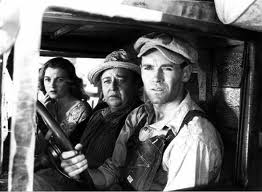
13.  The Wizard of Oz (1939), directed by Victor Fleming   

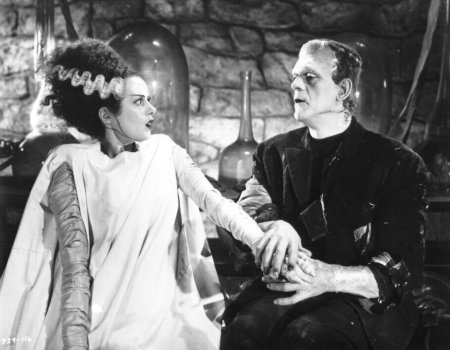
12.  Bride of Frankenstein (1935), Whale

11.  King Kong (1933), Cooper

10.  Wuthering Heights (1938), Wyler

9.  Freaks (1933), Browning

8.  Stagecoach (1936), Ford

7.  A Night at the Opera (1936), Wood

6.  Bringing Up Baby (1936), Hawks

5.  All Quiet on the Western Front (1931), Milestone

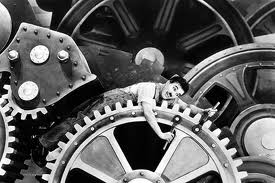
4.  Modern Times (1936), Chaplin

3.  M (1931), Lang

2.  The Grapes of Wrath (1939), Ford

1.  Duck Soup (1933), McCarey

Before there was the rating system (G, PG, R, X, etc), there was the Production Code.  Established in 1930, it began to be enforced in 1934, and imposed a strict set of rules and morality that Hollywood had to obey.  These rules had a profound impact on films for the next 30 years, forcing directors and screenwriters to address sexuality and violence in largely symbolic terms.   It wasn’t just sex, it was general morality – the language that was allowed to be spoken, and images that suggested crime did pay or cast the government in a bad light were censored.  This plus the fact that the country was in the throes of the great depression lead to an abundance of escapist films, with an abundance of extravagant musicals (which I could never get into) and “screwball” comedies (which I grew to love) – fast paced and silly movies (examples – Bringing up Baby, His Girl Friday) often involving upper crust members of high society being silly and stupid.   Crowds also escaped the hard times through great fantasy films like The Wizard of Oz and King Kong  It was also a popular time for horror movies, with the introduction of Dracula and Frankenstein and The Wolfman.  Romance was also big, with Wuthering Heights and the biggest film of the decade Gone With the Wind.

It wasn’t all escapism – many films dealt directly with issues of the time.  Frank Capra made a series of films that dealt directly (and sentimentally) with the depression and the plight of the American everyman (Mr. Deeds Goes to Town, Meet John Doe, Mr. Smith Goes to Washington).  With fascism on the rise, the German director Fritz Lang made the classic exploration of mob rule and vigilantism, M, while John Ford’s beautiful adaptation of Steinbeck’s great American novel The Grapes of Wrath told the story of disenfranchised and exploited migrant workers.  Finally, my favorite film of the decade, the Marx Brothers triumph Duck Soup, captures the surrealistic insanity of a world gone mad.   A broad comedy that is funny from first frame to end, to me it is comparable to Stanley Kubrick’s 1964 Dr. Strangelove in its ability to make us laugh at the impending apocalyse.


My Favorite Movies – 1940s

19.  The Philadelphia Story (1940), directed by George Cukor

18.  The Best Years of Our Lives (1946), Wyler

17.  Sullivan’s Travels (1941), P. Sturges

16.  The Shop around the Corner (1940), Lubitsch

15.  The Miracle of Morgan’s Creek (1944), P. Sturges

14.  Dead of Night (1945), Cavalcanti and Chricton

13.  Shadow of a Doubt (1943), Hitchock

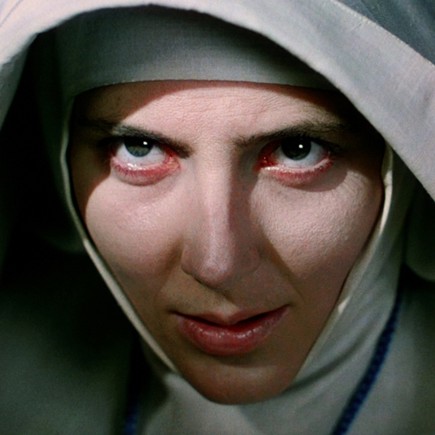
12.  Black Narcissus (1947), Powell and Pressburger

11.  The Ox Bow Incident (1948), Wyler

10.  The Treasure of the Sierra Madre (1949), Huston

9.   Odd Man Out (1947), Reed

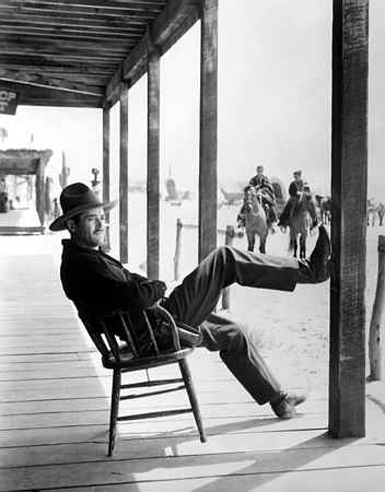
8.   My Darling Clementine (1946), Ford

7.   The Magnificent Ambersons (1946), Welles

6.   Citizen Kane (1941), Welles

5.   Casablanca (1943), Curtiz

4.   The Third Man (1949), Reed

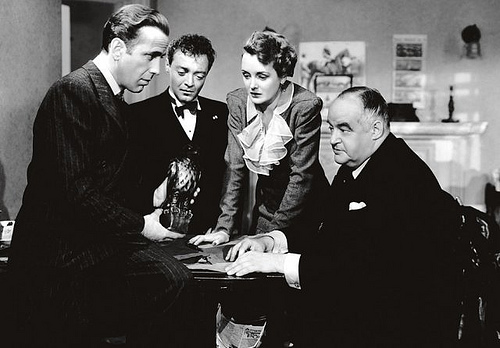
3.   The Maltese Falcon (1941), Huston

2.   Bicycle Thieves (1948), De Sica

1.   How Green Was My Valley (1941), Ford

A decade of profound pain and change and ultimately triumph, the 1940s saw cinema become a vital part of the global modern culture.  What emerges from the decade are many of the greatest films ever made.

Many of the greatest directors (including Ford, Hawks and Huston) were recruited by the government to make documentaries supporting the war effort.   When not churning out propagand, with films like William Wyler’s The Best Years of Our Live and Billy Wilder’s The Lost Weekend, Hollywood tried to address serious cultural issues – despite the heavy handedness of the approach; they were often effective, especially in the heart wrenching performances of Dana Andrews and Harold Russell as vets returning home in The Best Years of Our Lives.

The 40s are the decade in which a number of the true masters of the art form (Ford, Welles, Huston, Reed, De Sica) were at the peak of their abilities, using the studio system to produce a number of intensely personal films.   In Preston Sturges’ Sullivan’s Travels, Joel McRae plays a Hollywood director of popular comedies (not unlike Sturges himself) determined to make a “serious” film that speaks to the painful real lives being lived by his audiences.   Welles’ Citizen Kane and The Magnificent Ambersons were stylistically unlike anything to come before them, Reed’s Odd Man Out and The Third Man gave us unsentimental and very real glimpses into dangerous worlds (from James Mason’s IRA agent in Odd Man Out to the post war ruins and black markets of Vienna in The Third Man) that are typically neglected by Hollywood .  Huston turned introspective with his examinations of human greed in The Treasure of the Sierra Madre and The Maltese Falcon, while William Wyler examined mob rule in The Ox Bow Incident.  Meanwhile, John Ford made his two most personal and poetic films, My Darling Clementine and How Green Was My Valley.

Next time:  Hollywood struggles to overcome the blandness of the 50s, and films that are core to the cultural revolution of the 60s.

Home for the Holidays


The boys aren’t boys anymore.  They are full grown men, with their own lives to lead and their own paths to follow. Once again they were home for Christmas.  For a couple of mornings, when I’d get up and walk the hallway in the pre-dawn darkness, their rooms would be full again, just like they used to be, when home meant the same thing to us all.  Now they have left, and once again, like it feels every time they leave, the house is cold and empty.

At this moment, I’m sitting here alone in the midnight, listening to Patty Griffin sing “Heavenly Day”, and I’m thinking about love.   It occurs to me that pain and anguish and suffering are constant and never far away.  Love isn’t the denial or the absence of pain, rather, it is the defeat of, the triumph over, however temporary, our suffering.    Love is concurrently fleeting and permanent – even when it lasts for only a moment, its traces remain etched in our subconscious forever, and the memory of its healing power lasts long after the particulars of its instance have faded and dissolved.

We enter the world cold and alone, small and fragile, and then we are gathered in our mother’s arms, and the first thing that is communicated to us, the very first thing we learn, is love.    It is our initiation ceremony to this universe, our true baptism.  The power of that baptismal love and its ability to make us quiet and still in the enormous and harsh and frightening new world we have been thrust into is burned into the core of our being.   The simple truth that love is as vital to our survival as air to breathe or food for sustenance never leaves us.

So it is that, spurred on by a gnawing ache, we spend so much time blindly flailing about, stumbling over and confusing needs with desires, in a desperate search for love.    The need for love is so primal and constant that it can distort us, and distort our memory and knowledge of what deep down we know love to be, until all we have is the raw and unsatisfied hunger for that which we no longer can recognize, and we are blinded and preyed upon by those who have turned their backs on love.   To deny love is to embrace the black emptiness of cynicism.  Cynicism is the corruption of love, the betrayal of its pure and selfless essence, the manipulation of love into something dark and sinister.   These manipulations can destroy a love, but they cannot destroy the capacity for love.  Only love can wipe clean the dark stain that cynicism leaves on the soul.

Love is transformational.  The love in which my children were conceived has transformed into a love for them that has continued and deepened over the years.   It is a love that has sustained me and buffered me from the eroding forces of pain and anguish, and I hope that it is strong enough to shield them from the suffering that will be just as inevitable a part of their journey.  Above all, may they forever carry my love inside of them, and may it sustain them in times of need, as it has sustained me.